
Water Reuse Systems for Data Centers
Your cooling towers evaporate 80% of what they withdraw.
The other 20% doesn’t have to go down the sewer.
The Challenge for Developers
The constraint isn't water it's sewer capacity and discharge limits
Conventional wastewater treatment plants were not designed with today’s development needs in mind. They require large footprints, lengthy construction timelines, and costly infrastructure extensions — often making them impractical for new or rapidly growing communities.
Developers face additional hurdles with limited land availability, high utility connection fees, and increasing sustainability expectations. To stay competitive, modern developments need smarter, more compact wastewater solutions that can be implemented quickly, perform reliably, and scale with growth.
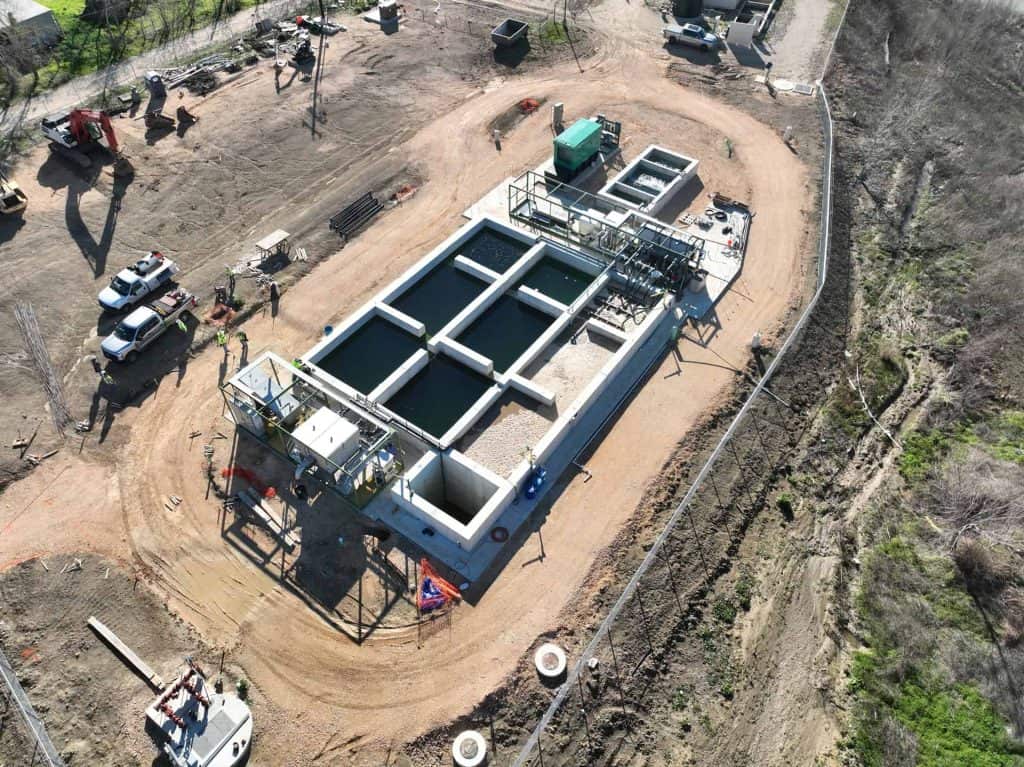
Our Solution
Onsite MBR treatment and reuse
reUse provides end-to-end engineering and delivery, integrating advanced Membrane Bioreactor (MBR) technology into compact, developer-friendly systems.

Strategic Advantage
What reUse delivers
Strategic infrastructure modernization through advanced municipal wastewater treatment systems.
Shorter Approval Timelines
Space-efficient Design
Lifecycle Cost Savings
Onsite reuse reduces utility fees and lowers dependence on external water supplies, translating to better long-term economics.
Sustainability Credentialing
Scalable Infrastructure
System layouts and modular components defined to evolve alongside your project phases.
Case study
At the heart of every system is our Max-Flow MBR module — a rigid-plate membrane that maintains consistent, high-quality effluent while minimizing maintenance.
This technology has been proven in municipal, commercial, and residential settings across the U.S.

Siting and permitting for data centers
- New residential master-planned communities.
- Resort or mixed-use developments.
- Remote, off-grid, or underserved sites without sewer access.
- Expanding urban areas without existing sewer access.
The Impact
Frequently Asked Questions
Wastewater reuse is now a critical component of sustainable water infrastructure. These frequently asked questions explain how reuse systems work, where they apply, and what to consider when planning a reliable, compliant solution.
What is wastewater reuse?
Wastewater reuse is the process of treating wastewater to a high enough quality that it can be safely reused instead of discharged. Reused water is commonly applied to irrigation, industrial processes, cooling systems, and other non potable uses.
Is reused wastewater safe?
While all systems rely heavily on a biological process to reduce the organics, such as Nitrogen and Phosphorous, a membrane acts as a physical barrier to reliably prevent solids and pathogens from leaving the system, thus eliminating the need for clarifiers, cloth filters, or other such separation processes. Without the need for filters or clarifiers, everything about the design of the plant changes. Smaller tankage is required. Smaller blowers are utilized. Significantly less land space is needed for the plant. Finally, the installation and construction labor is greatly reduced. It’s like getting
all the power and performance of the Ram 3500 with the fuel efficiency and drivability of the Cooper Mini!
What is Class A and Class A plus reuse water?
Class A and Class A plus reuse standards define the treatment level required for reclaimed water used in public and non potable applications. These standards address pathogen removal, turbidity, and disinfection to ensure public safety and regulatory compliance.
What types of projects benefit most from wastewater reuse systems?
Wastewater reuse systems are commonly used by municipalities, master planned communities, commercial developments, industrial facilities, campuses, and hospitality projects where water demand is high and long term water security is critical.
Why is MBR technology commonly used for wastewater reuse?
Membrane bioreactor technology produces very low turbidity effluent with consistent quality. It combines biological treatment and membrane filtration, making it well suited for reuse applications that require reliable performance and a compact footprint.
Can wastewater reuse reduce operating costs?
Yes. Reuse systems reduce dependence on potable water supplies, lower water purchase costs, and help stabilize long term utility expenses. Over time, these savings can offset initial system investment.
Do wastewater reuse systems require special permits?
Is wastewater reuse suitable for existing facilities?
What makes a turnkey wastewater reuse system different?
A turnkey system means one team manages feasibility, permitting, design, construction, commissioning, and operational support. This reduces risk, improves accountability, and ensures the system performs as intended.
How do I know if wastewater reuse is right for my project?
The decision depends on water demand, regulations, site conditions, and long term goals. A reuse feasibility evaluation helps determine whether a reuse system is practical and cost effective.
Our team is ready to help
Explore a Turn-Key Water Reuse System for Your City
Partner with reUse to build a smarter, more cost-efficient water reuse system for your city.